
2026 A Día de Muertos Altares
Embracing Community / Cultivando Comunidad
Explore twelve moments of Día de Muertos as lived across our communities — from candlelit ofrendas glowing with memory to cempazúchil‑bright spaces shaped by family care and creative expression. Each altar reveals a distinct way families, artists, and neighbors honor their loved ones through remembrance, imagination, and shared tradition, reflecting the vibrant spirit of WPCA’s 34th Annual Día de los Muertos Exhibition.
/
Explora doce momentos del Día de Muertos vividos en nuestras comunidades — desde ofrendas iluminadas por velas que guardan la memoria hasta espacios llenos de cempazúchil creados con cariño familiar y expresión creativa. Cada altar revela una manera única en que familias, artistas y vecinxs honran a sus seres queridos a través del recuerdo, la imaginación y la tradición compartida, reflejando el espíritu vibrante de la 34ª Exhibición Anual de Día de los Muertos de WPCA.
Community Altaristas
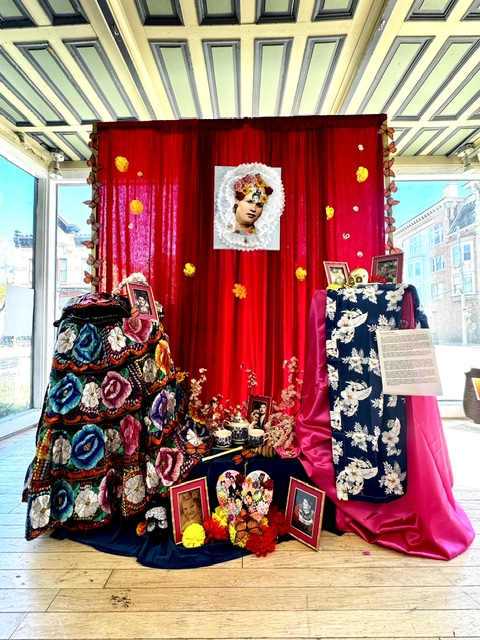
Thinking About Saburo
Community altarista: Lalo Gutierrez
Artist Statement
There is no such thing as an ordinary life. Our lives are shaped by politics, geography, prejudice, and culture. Such was the life of my aunt, Antonia Teodomira Gutiérrez Colín Higa. She was born into a sexist, male‑dominated world where women were expected only to clean and to reproduce. She realized that women’s lives often depended on the kindness of the men around them — and not all men were kind. In the late 1950s, she immigrated from Mexico City to Milwaukee, Wisconsin, something single women simply did not do at that time. She found employment and sent money to her mother and sister.
She met a Japanese American man, Wallace Saburo Higa, who spoke no Spanish. She spoke no English. Yet somehow, they communicated — as my uncle once told me. When they decided to marry, it was illegal for them to do so in Milwaukee because interracial marriage was still prohibited in Wisconsin. They traveled to Mexico to be married, but because my uncle was not Catholic, they could only marry under civil law. Saburo served in the U.S. military with distinction — in the same country that had placed his community in relocation camps and stripped them of their wealth during the 1940s.
Severe illnesses affected my aunt’s quality of life, yet throughout every challenge, my uncle never left her side. He cared for her not out of duty, but out of love. My aunt once told me that marrying him was the best decision she ever made — and indeed, it was. The ofrenda celebrates the way they chose to live their lives. Together, they found hope, love, charity, and strength. It was a life well lived. We celebrate their life.
///
No existe tal cosa como una vida ordinaria. Nuestras vidas están marcadas por la política, la geografía, los prejuicios y la cultura. Así fue la vida de mi tía, Antonia Teodomira Gutiérrez Colín Higa. Nació en un mundo sexista y dominado por los hombres, donde a las mujeres se les asignaban dos propósitos: limpiar y reproducirse. Ella entendió que la vida de una mujer dependía muchas veces de la bondad del hombre a su lado — y no todos los hombres eran bondadosos.A finales de los años cincuenta, emigró de la Ciudad de México a Milwaukee, Wisconsin, algo que las mujeres solteras simplemente no hacían en esa época. Consiguió trabajo y enviaba dinero a su madre y a su hermana.
Conoció a un hombre nipoamericano, Wallace Saburo Higa, que no hablaba español. Ella no hablaba inglés. Sin embargo, lograron comunicarse — como una vez me contó mi tío. Cuando decidieron casarse, era ilegal hacerlo en Milwaukee porque el matrimonio interracial seguía prohibido en Wisconsin. Viajaron a México para casarse, pero como mi tío no era católico, solo pudieron casarse por lo civil. Saburo sirvió en el ejército de los Estados Unidos con distinción — en el mismo país que había puesto a su comunidad en campos de reubicación y les había arrebatado sus bienes durante los años cuarenta.
Mi tía sufrió enfermedades severas que afectaron su calidad de vida, pero a lo largo de cada dificultad, mi tío nunca se apartó de su lado. La cuidó no por obligación, sino por amor. Mi tía me dijo una vez que casarse con él fue la mejor decisión que tomó — y, sin duda, lo fue. La ofrenda celebra la forma en que eligieron vivir sus vidas. Juntos encontraron esperanza, amor, generosidad y fortaleza. Fue una vida bien vivida. Celebramos su vida.
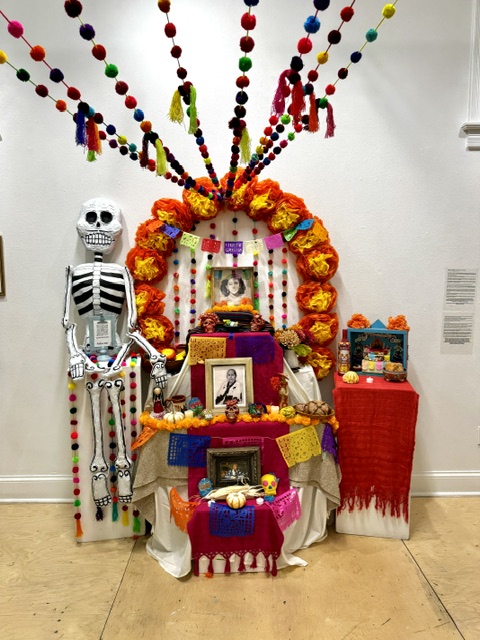
Antes de mi, ellas.
Community Altarista: Yesica Coria
Artist Statement
To my grandmothers and my aunt. / Para mis abuelitas y mi tia.
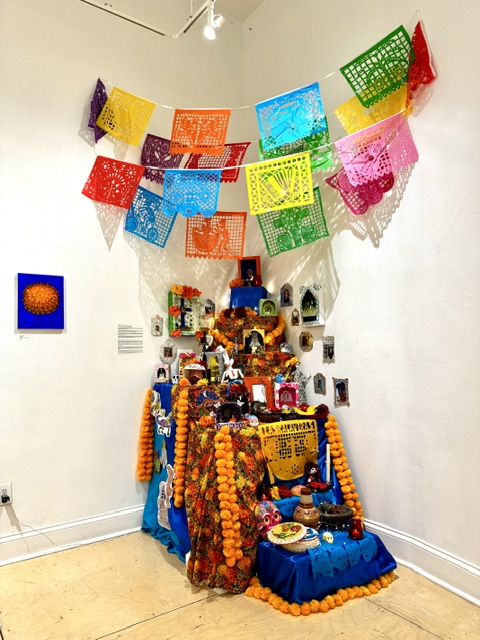
WPCA Youth Artist Ofrenda: Embracing Us
Community Altaristas: WPCA afterschool students
Artists Statement
Over three weeks, the after-school artists participated in three projects that amplify Día de Muertos traditions. Throughout all projects, the artists had an individual in mind before starting an art piece and included elements that tie into the loved one.
Each youth artist was asked to reflect on death and create a nicho about a passed on individual using cardboard, acrylic paint, polymer clay, and candle light. Youth artists created objects with cardboard and polymer clay to add to their nicho that tie into their loved ones’ interests or history.
The following week, youth learned about Carmen Cabello, a traditional paper mache artist who is an integral artist to the modern traditions still upheld. The youth artists created papier-mache skeletons or skulls using tinfoil, painter’s tape, gesso, and acrylic paint. The vibrant skulls and skeletons were created to emulate traditional techniques and patterns.
In the final week, youth artists created embossed frames with tin. This practice comes from a traditional Mexican folk art technique called hojalata. Youth artists used tin and ceramic tools to make impressions on metal sheets that were turned into frames. Many of the students had family members and pets in mind while creating and printed pictures of said individuals to put into the frames.
/
Durante más de tres semanas, los artistas del programa extracurricular participaron en tres proyectos que amplifican las tradiciones del Día de Muertos. En todos los proyectos, los artistas tenían en mente a una persona antes de comenzar una obra de arte e incluían elementos que se relacionan con su ser querido.
Se pidió a cada joven artista que reflexionara sobre la muerte y creará un nicho sobre una persona fallecida usando cartón, pintura acrílica, arcilla polimérica y luz de vela. Los jóvenes artistas crearon objetos con cartón y arcilla polimérica para añadir a su nicho que se relacionan con los intereses o la historia de sus seres queridos.
La semana siguiente, los jóvenes aprendieron sobre Carmen Cabello, una artista tradicional de papel maché que forma parte integral de las tradiciones modernas que aún se mantienen. Los jóvenes artistas crearon esqueletos o calaveras de papel maché usando papel de aluminio, cinta de pintor, gesso y pintura acrílica. Las calaveras y los esqueletos vibrantes fueron creados para emular técnicas y patrones tradicionales.
En la última semana, los jóvenes artistas crearon marcos repujados con lámina de metal. Esta práctica proviene de una técnica tradicional del arte popular mexicano llamada hojalata. Los jóvenes artistas usaron lámina de metal y herramientas de cerámica para hacer impresiones en láminas de metal que luego se convirtieron en marcos. Muchos de los estudiantes tenían en mente a familiares y mascotas mientras creaban y imprimieron fotos de dichas personas para poner en los marcos.
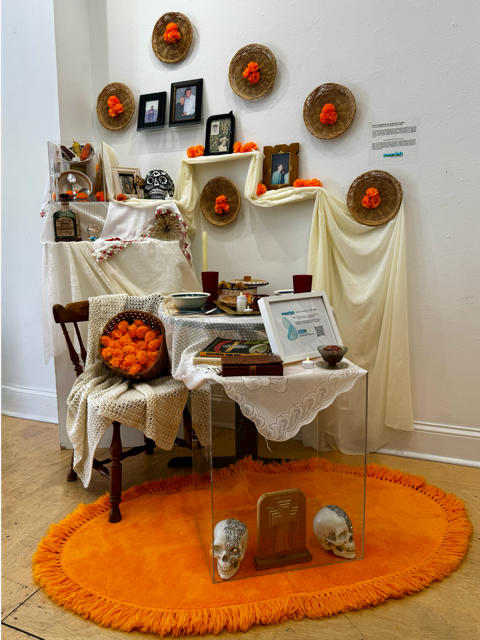
Roots of Nourishment: Trae un Recuerdo a la Mesa
Community Altarista: Aaron Arteaga & Nourish MKE
Artist Statement
Created by Nourish MKE, this altar reflects their mission to build welcoming community food centers where everyone can find nourishment for both body and soul. Nourish invites its community to share recipes, food memories, and stories passed down through generations — dishes that carried care, culture, and connection. These offerings form a collective table that honors loved ones and celebrates how nourishment is more than food; it is dignity, belonging, and the ancestral love that continues to feed Milwaukee’s community.
///
Raíces de Nutrición: Trae un Recuerdo a la Mesa
Creado por Nourish MKE, este altar refleja su misión de crear espacios comunitarios acogedores donde todas las personas puedan encontrar nutrición para el cuerpo y el espíritu. Nourish invita a su comunidad a compartir recetas, recuerdos culinarios e historias heredadas — los platillos que nos dieron cariño, cultura y conexión. Estas ofrendas forman una mesa colectiva que honra a nuestros seres queridos y celebra que la nutrición es más que comida; es dignidad, pertenencia y el amor ancestral que sigue alimentando a la comunidad de Milwaukee.
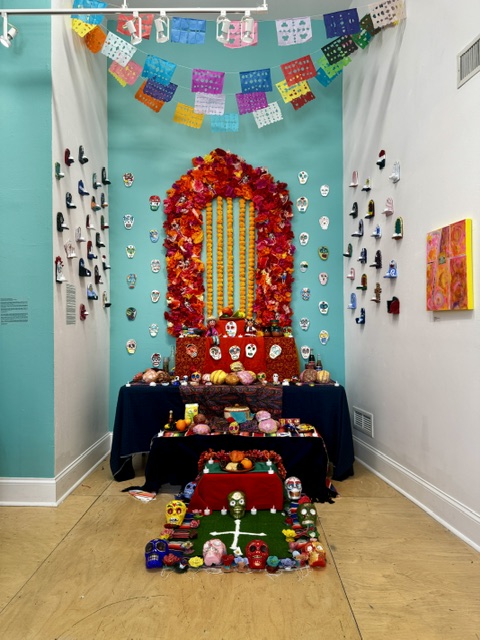
Earth, Wind, Fire, and Water / Tierra, Viento, Fuego y Agua
Community Altaristas: Students of Hayes Bilingual School
Artist Statement
Every year, Día de los Muertos invites us to do something simple and powerful: remember. Each student who contributed to this Altar chose a loved one who is no longer with their family and created a piece en su memoria. They honor abuelos, relatives, friends, y sus mascotas favoritas.
The four elements hold the altar together. Earth (la tierra) esta presente in the clay flowers shaped by our sixth graders in remembrance of life, the clay Calaveras made by our fifth and seventh graders, the tissue paper flowers our third and fourth graders arranged on the arch. Wind (el viento) moves through the papel picado cut by our third and fourth graders and the hanging sugar skulls made by our fifth swaying with every breath of air at the thin veil between worlds. Fire (el fuego) glows in the mini hanging candle altars created by our eighth graders, each one a small light to guide loved ones home. Water (el agua) is offered to quench the thirst of travelers after their long journey.
Our first graders built conchas from plaster gauze, a playful tribute to the pan de muerto traditionally set on altars. Sus manitas shape each one layer by layer, just as families build Memorias across generations.
Our young Hayes artists learned how artisans across Mexico have kept these traditions alive for centuries, passing techniques de generación en generación. Students also learned about local artists such as Yesi Coria’s Corn Husk art to create corn husk flowers from our 2nd graders on the top of the alter. They discovered that handmade work carries something no machine can copy: the mark of a person’s hands, their patience, and their intention. No two pieces are alike, porque cada persona recordada es único.
This ofrenda is also an act of community. Día de los Muertos has never been a solitary practice: familias, vecinos, and friends gather to remember together. Here, students from first through eighth grade each gave a piece to one shared altar, and now it opens to everyone who walks through these doors. Remembering together reminds us that no one grieves alone, and that our loved ones live on in the stories we share across languages, generations, and backgrounds.
In a time when so much is generated instantly by machines, this altar is a reminder that remembrance takes time. It asks us to slow down, make something with our hands, and say a name out loud.. Su memoria vive en nosotros.
Cada año, el Día de los Muertos nos invita a hacer algo simple y poderoso: recordar. Cada estudiante que contribuyó a este Altar eligió a un ser querido que ya no está con su familia y creó una pieza en su memoria. Honran a abuelos, familiares, amigos y sus mascotas favoritas.
/
Los cuatro elementos mantienen el altar unido. La tierra está presente en las flores de barro hechas por nuestros alumnos de sexto grado en recuerdo de la vida, las calaveras de barro hechas por nuestros alumnos de quinto y séptimo grado, y las flores de papel que nuestros alumnos de tercero y cuarto grado organizaron en el arco. El viento se mueve a través del papel picado cortado por nuestros alumnos de tercero y cuarto grado y las calaveras de azúcar colgantes hechas por nuestros alumnos de quinto, balanceándose con cada soplo de aire en el delgado velo entre mundos. El fuego brilla en los mini altares colgantes con velas creados por nuestros alumnos de octavo grado, cada uno con una pequeña luz para guiar a los seres queridos de regreso a casa. El agua se ofrece para calmar la sed de los viajeros después de su largo viaje.
Nuestros alumnos de primer grado construyeron conchas con gasas de yeso, un tributo lúdico al pan de muerto que tradicionalmente se pone en los altares. Sus manitas forman cada una capa por capa, tal como las familias construyen Memorias a lo largo de generaciones.
Nuestros jóvenes artistas de Hayes aprendieron cómo los artesanos de todo México han mantenido estas tradiciones vivas durante siglos, pasando técnicas de generación en generación. Los estudiantes también aprendieron sobre artistas locales como Yesi Coria y su arte en hojas de maíz para crear flores de hoja de maíz con nuestros alumnos de segundo grado en la parte superior del altar. Descubrieron que el trabajo hecho a mano lleva algo que ninguna máquina puede copiar: la marca de las manos de una persona, su paciencia y su intención. Ninguna pieza es igual, porque cada persona recordada es única.
Esta ofrenda también es un acto de comunidad. El Día de los Muertos nunca ha sido una práctica solitaria: familias, vecinos y amigos se reúnen para recordar juntos. Aquí, estudiantes desde primer hasta octavo grado dieron cada uno una pieza para un altar compartido, y ahora se abre a todos los que cruzan estas puertas. Recordar juntos nos recuerda que nadie llora solo, y que nuestros seres queridos viven en las historias que compartimos a través de idiomas, generaciones y antecedentes.
En un momento en que tanto se genera instantáneamente por máquinas, este altar es un recordatorio de que el recuerdo toma tiempo. Nos pide que nos desacelerar, hagamos algo con nuestras manos y digamos un nombre en voz alta. Su memoria vive en nosotros.
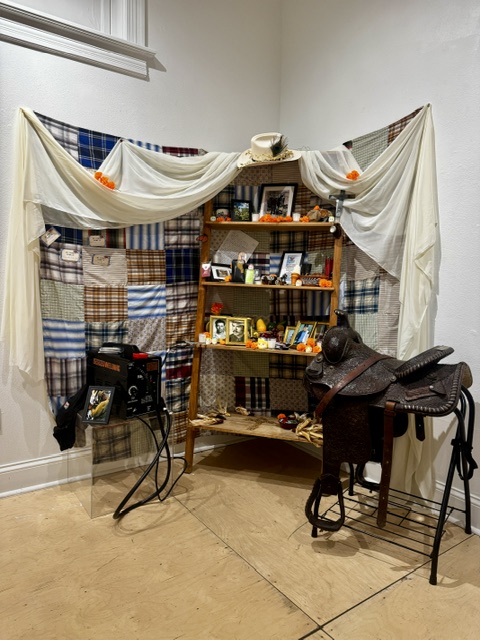
Fuiste a Arreglarle Las Puertas a San Pedro
Community Altarista: Iuscely Flores
Artist Statement
For Catholics, the story of the keys to the Kingdom of Heaven symbolizes spiritual authority; it is the moment Jesus hands the keys to Saint Peter and tells him: “I will give you the keys of the Kingdom of Heaven; whatever you bind on earth will be bound in heaven, and whatever you loose on earth will be loosed in heaven” (Matthew 16:19).
This reminds us of the importance of faithfulness, forgiveness, and the mission to open a path for anyone in need—whether in the universe or here on earth. Just as Sixto did.
Sixto gave sixteen years of his life to the United States without documents, where he built a home with eleven bedrooms, four bathrooms, three living rooms, and two dining rooms, to bring together twenty-four family members on 15th and Cleveland in Milwaukee.
Sixto was a welder, an inventor, a carpet installer, and a carpenter who crafted this very wooden altar twelve years ago. The doors to his workshop were always open; he would weld and reinforce the carts of passing ice cream vendors in exchange for a frozen treat.
After paving the way for others, it was time for him to forge his own path back to Mexico in 2018.
He made his home in El Pueblo, Veracruz de la Sierra, Durango, where he became the local “fix-it man.” People brought him cars, motorcycles, tractors, and machinery of all kinds, even pigs needing castration, and broken tortilla presses. After repairing things and at check out time, he would simply say, “God’s got it.”
During the final year of his life, he served as the Director of Rural Development for the Municipality of San Dimas, focusing on forestry projects, such as reforestation efforts, training fire brigades, as well as providing support to local ranchers. Upon his passing, hundreds of people traveled from various regions. Some from as far as five hours away to bid him farewell, a testament to the profound impact he had on rural communities.
His only daughter, Camila, was the last to arrive. After sitting for hours with United States Citizen and Immigration Services, and proving her father was on his death bead, she got to the town to say a final goodbye, just 10 hours before his burial.
She arrived carrying two welding rods; she went straight to the workshop where the wake was being held and, as she said her goodbyes, placed the rods on his casket in the shape of a cross, saying, “It’s your turn to go fix Saint Peter’s doors, Papi.”
We invite you to take a tag, write the name of a family member, friend, or loved one—someone you perhaps did not have the chance to say goodbye to because this nation’s doors are not as flexible as Saint Peter’s—and attach it to the quilt.
This quilt was crafted by religious seamstresses in Durango using all of Sixto’s favorite shirts.
Para las personas Católicas la historia de las llaves del Reino de los Cielos es un símbolo de autoridad espiritual cuando Jesús le entrega llaves a San Pedro y le dice:
“Te daré las llaves del Reino de los Cielos; todo lo que ates en la tierra quedará atado en el cielo, y todo lo que desates en la tierra quedará desatado en el cielo” (Mateo 16:19).
Esto nos recuerda la importancia de la fidelidad, el perdón y la misión de abrir camino para todo aquel que lo necesite ya sea a través del universo tal como en la tierra.
Así como lo hizo Sixto.
Sixto regaló a los Estados Unidos 16 años de su vida donde construyó un hogar con 11 cuartos, 4 baños, 3 salas, y 2 comedores para poder juntar a 24 familiares en la 15 y Cleveland en Milwaukee.
Sixto fue un soldador, un inventor, instalador de carpeta, y un carpintero que hizo este mismo altar de madera hace 12 años. Las puertas de su taller siempre se mantuvieron abiertas y de vez en cuando le soldaba y reforzaba los carritos a los paleteros mientras pasaban a cambio de una nieve.
Después de abrirle el camino a varios, le tocó forjar su propio camino de regreso a México en el 2018.
Hizo su casa en El Pueblo, Veracruz de la Sierra, Durango. Dónde se convirtió en el “arreglatodo”. Le llegaban carros, motos, tractores, máquinas de todo tipo, marranos para castrar, hasta prensas para hacer tortillas y después de arreglarlas, sólo decía: “Dios pagará”.
Hacía el último año de su vida trabajó como el Director De Desarrollo Rural Para El Municipio de San Dimas, su enfoque fueron los proyectos forestales tal como los lumbreros de varias comunidades, la reforestación, y apoyos para los rancheros. Al fallecer, llegaron cientos de personas de distintas regiones, hasta 2 a 5 horas del pueblo a darle su despedida dado a su impacto en las comunidades rurales.
Su hija, Camila, fue la última en llegar a solo 10 horas antes de su sepelio, por falta de documentos, llegó con 2 varillas de soldar en mano, se arrimó a su taller donde lo velaban y al despedirse dejó las varillas sobre su ataúd en forma de cruz y dijo: “te toca ir arreglarle las puertas a San Pedro papi.”
Te invitamos a que tomes una etiqueta y escribas el nombre de un familiar, amigo o persona que tal vez no tuviste la fortuna de despedirte dado a que las puertas de esta nación no son tan flexibles como las de San Pedro y la pegues en la manta hecha por costureras religiosas en Durango de
todas las camisas favoritas de Sixto.
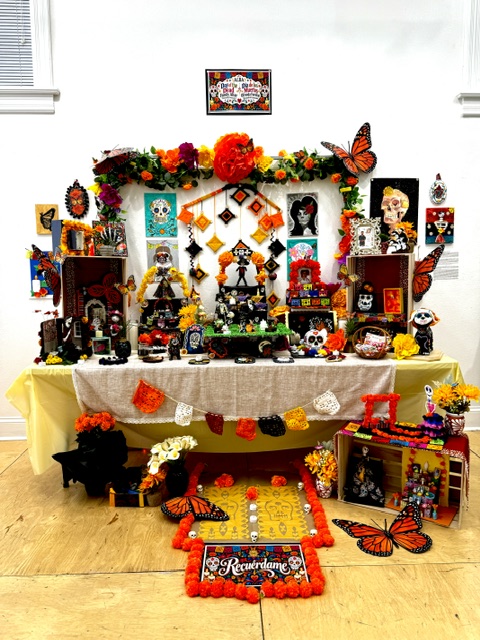
Embracing Community
Community altaristas: Academia de Lenguaje y Bellas Artes
Artists Statement
Our altar is a collection of memories lovingly shared by ALBA students, families, and staff in honor of dear loved ones who are no longer physically with us. Each photograph, flower, artwork, and personal offering represents a life that continues to hold a special place in someone’s heart. At ALBA, Día de los Muertos gives us an opportunity to teach our students that remembering is an act of love. We honor those who came before us by sharing their names, their stories, their traditions, and the memories that continue to connect generations. Our ofrenda reminds us that the people we love remain part of who we are—in the lessons they taught us, the traditions they passed down, the laughter we remember, and the love we continue to carry.
As a school that focuses on cultural relevance, we believe it is important for our students to see their cultures and family traditions honored, valued, and celebrated. Día de los Muertos allows us to embrace both the joy of remembering and the beauty of coming together as a community. Sharing our altar with the greater Milwaukee community makes this tribute even more meaningful. We invite you not simply to view our ofrenda, but to share in the memories entrusted to it. Behind every offering is a family, behind every photograph is a story, and behind every name is someone who was—and continues to be—deeply loved.
This altar belongs to all of us. It is a celebration of family, culture, community, remembrance, and above all, love. As long as we continue to tell their stories, a part of them remains with us.
///
Nuestro altar es una colección de recuerdos compartidos con mucho cariño por los estudiantes, las familias y el personal de ALBA, en honor a nuestros queridos seres que ya no están físicamente con nosotros. Cada fotografía, flor, obra de arte y ofrenda personal representa una vida que continúa ocupando un lugar especial en el corazón de alguien.
En ALBA, el Día de los Muertos nos brinda la oportunidad de enseñar a nuestros estudiantes que recordar es un acto de amor. Honramos a quienes nos precedieron compartiendo sus nombres, sus historias, sus tradiciones y los recuerdos que continúan uniendo a las generaciones. Nuestra ofrenda nos recuerda que las personas que amamos siguen siendo parte de quienes somos: en las enseñanzas que nos dejaron, las tradiciones que nos transmitieron, las risas que recordamos y el amor que seguimos llevando en nuestros corazones.Como una escuela que se enfoca en la relevancia cultural, creemos que es importante que nuestros estudiantes vean sus culturas y tradiciones familiares honradas, valoradas y celebradas. El Día de los Muertos nos permite abrazar tanto la alegría de recordar como la belleza de unirnos como comunidad. Compartir nuestro altar con la comunidad de Milwaukee hace que este homenaje sea aún más significativo. Los invitamos no solo a contemplar nuestra ofrenda, sino también a compartir los recuerdos que han sido depositados en ella con tanto amor. Detrás de cada ofrenda hay una familia, detrás de cada fotografía hay una historia y detrás de cada nombre hay alguien que fue —y continúa siendo— profundamente amado.
Este altar nos pertenece a todos. Es una celebración de la familia, la cultura, la comunidad, el recuerdo y, sobre todo, el amor. Mientras sigamos contando sus historias, una parte de ellos permanecerá siempre con nosotros.
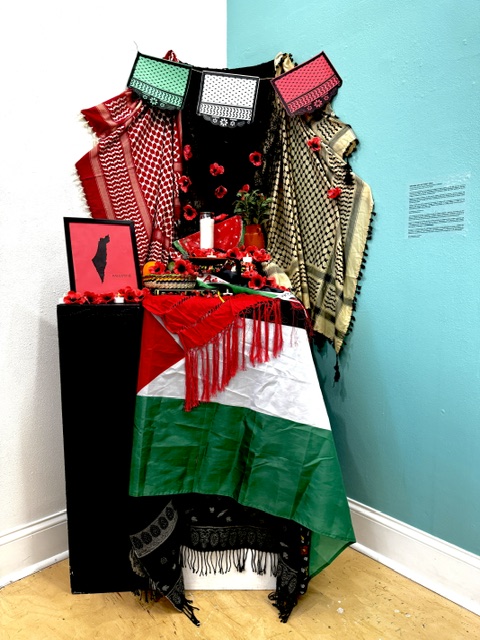
Ofrendas para un Futuro Libre
Community Altarista: Raices Revolucionarias Collective
Artists Statement
As Raíces Revolucionarias, an art collective of Indigenous Brown women, we offer this altar as a space of remembrance, solidarity, and collective healing. Created for WPCA’s Día de los Muertos exhibition, this altar honors the lives lost to violence, displacement, and oppression across the world, uplifting the shared struggle for liberation that connects our communities.
Grounded in ancestral traditions, the altar weaves together symbols of resilience — flowers, textiles, and offerings that speak to the strength of peoples who refuse erasure. Each element reflects our commitment to honoring those who are no longer with us and to standing with those who continue to fight for dignity, safety, and self‑determination.
Aligned with this year’s theme, Embracing Community, our offering calls us to gather in remembrance and recognize how grief can become a bridge between peoples. It invites viewers to reflect on our interconnected struggles and to join in the collective responsibility of building a world where liberation is shared, and community is a source of power.
In solidarity and remembrance,
Raíces Revolucionarias
/
Como Raíces Revolucionarias, un colectivo de arte de mujeres indígenas y mestizas, ofrecemos este altar como un espacio de recuerdo, solidaridad y sanación colectiva. Creado para la exhibición del Día de los Muertos de WPCA, este altar honra las vidas perdidas a causa de la violencia, el desalojo y la opresión en todo el mundo, elevando la lucha compartida por la liberación que conecta a nuestras comunidades.
Basado en tradiciones ancestrales, el altar entrelaza símbolos de resiliencia: flores, textiles y ofrendas que hablan de la fuerza de los pueblos que se niegan a desaparecer. Cada elemento refleja nuestro compromiso de honrar a quienes ya no están con nosotros y de acompañar a quienes continúan luchando por la dignidad, la seguridad y la autodeterminación.
En línea con el tema de este año, Cultivando la Comunidad, nuestra propuesta nos invita a reunirnos en recuerdo y a reconocer cómo el duelo puede convertirse en un puente entre las personas. Invita a los espectadores a reflexionar sobre nuestras luchas interconectadas y a sumarse a la responsabilidad colectiva de construir un mundo donde la liberación se comparta y la comunidad sea una fuente de poder.
Con solidaridad y recuerdo,
Raíces Revolucionarias
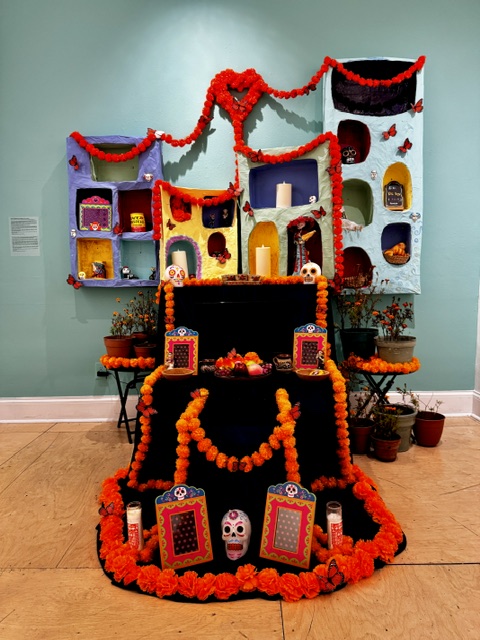
Home Lives Within Us / El hogar vive en nosotros
Community altaristas: Latinos Unidos (Milwaukee School of Languages) High School
Artists Statement
Home is more than a place; it is a feeling we carry, a story we share, and a love that transcends time. It lives in the aromas of our food, the sweetness of familiar flavors, the rhythm of a beloved song, the beauty of our language, and the embrace of our community. This interactive Día de los Muertos altar invites us to honor the strength of our ancestors, celebrate the creativity of our communities, and connect through the five senses. Breathe in familiar scents, taste a beloved treat, listen to the music that made our loved ones dance, and discover the stories of our students about those who came before us.
Home is what unites us, memory is what connects us, and love is what keeps our ancestors alive within us. We invite you to share the story of someone you love. Speak their name, remember their laughter, and celebrate their life. For as long as their stories are told, their spirit remains woven into the fabric of who we are and the future we create together.
High school students: Lucas Serrano, Leronardo; Odom, Brooklyn; Perez, Adamaris; Reyes, Janielyz; Weaver Negron, Maia; Xelaya, Ximena; Gonzalez, Emily; Morales-Hernandez, Anabel; Pavon, Yaretzi; Ortiz, Xiomara; Tapia Aparicio, Gelen
Middle School students: Ramos, Sophia; Pelcasstre, Eva; Martinez, Bridget; Garcia, Jaydeliz; Calles, Nicole; Calles, Amayrani
Teachers: Mrs. Rosas Bucio, Ms. Lira and Ms. Beene
///
El hogar es más que un lugar; es un sentimiento que llevamos dentro, una historia que compartimos y un amor que trasciende el tiempo. Vive en los aromas de nuestra comida, la dulzura de los sabores familiares, el ritmo de nuestra música, la belleza de nuestro idioma y el abrazo de nuestra comunidad.
Este altar interactivo del Día de los Muertos nos invita a honrar la fortaleza de nuestros antepasados, celebrar la creatividad de nuestras comunidades y fortalecer nuestros lazos a través de los cinco sentidos.
Respira los aromas que despiertan recuerdos, saborea un dulce, escucha la música que hacía bailar a nuestros antepasados y descubre las historias de nuestros estudiantes sobre quienes nos precedieron. El hogar es lo que nos une, los recuerdos son lo que nos conecta y el amor es lo que mantiene vivos a nuestros antepasados dentro del corazón. Te invitamos a compartir la historia de alguien que amas. Pronuncia su nombre, recuerda su risa y celebra su vida. Porque mientras sus historias siguen contándose, su espíritu permanecerá entretejido en la esencia de quienes somos y en el futuro que construiremos juntos.
Escuela Secundaria: Lucas Serrano, Leronardo; Odom, Brooklyn; Perez, Adamaris; Reyes, Janielyz; Weaver Negron, Maia; Xelaya, Ximena; Gonzalez, Emily; Morales-Hernandez, Anabel; Pavon, Yaretzi; Ortiz, Xiomara; Tapia Aparicio, Gelen
Escuela Intermedia: Ramos, Sophia; Pelcasstre, Eva; Martinez, Bridget; Garcia, Jaydeliz;Calles, Nicole; Calles, Amayrani
Maestras: Sra. Rosas Bucio, Sra. Lira y Srta. Beene
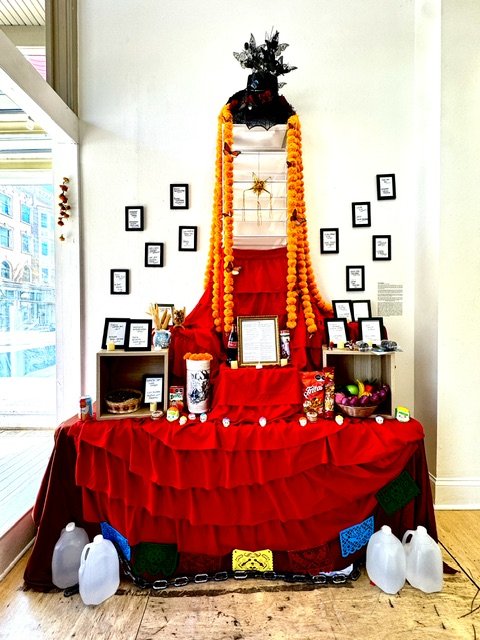
THIS IS AMERICA
Community Altaristas: Comite Sin Fronteras
Artists Statement
Comité Sin Fronteras works to provide direct aid to undocumented people in our community. Using an abolitionist perspective helped shape our altar. Our desire for a world without borders is not a fight done by each community alone, but together hand-in-hand unified towards a shared vision. There are many overlapping fights against oppressive forces that we see as one in the same. Our altar will honor those murdered by ICE on the streets, in detention, or through horrific policies and practices that made people feel like death was a better option.
61 people have been reported to be murdered by ICE since January 1st, 2025 through October 10th, 2026. This is at least 61 fractured families and communities, and this doesn’t include the communities that are traumatized and live in fear everyday over how their reality could change on a whim. This count of known lives lost doesn’t include those who choose death over unjust imprisonment, babies that are still being formed in their mothers womb, and those who are simply unreported or disappeared and go missing.
Altars are a beautiful tradition that combines grief, hope, death, and love while honoring the lives we have lost. We used some imagery of La Catrina to highlight that the immigrant working class, though always under attack, is being targeted violently at an unprecedented rate. At the same time, our altar celebrates the courage of those who hope, dream, and fight for a better future.
Today we honor those murdered by listing the countries that they came from to pursue the “American Dream”. It’s believed that once you set foot here, that the American dream is yours to have but this is not the true American reality. For those impacted by ICE terror, the American reality is knowing if you leave your home you may not come back, that it is safer to give birth in your house then go to the hospital, and that we must prepare how to explain to children why their parents don’t come home. THIS is America.
THIS America is what we fight to change.
///
Comité Sin Fronteras trabaja para brindar ayuda directa a personas indocumentadas en nuestra comunidad. Usar una perspectiva abolicionista ayudó a dar forma a nuestro altar. Nuestro deseo de un mundo sin fronteras no es una lucha que cada comunidad haga por sí sola, sino juntos, mano a mano, unificados hacia una visión compartida. Hay muchas luchas superpuestas contra fuerzas opresivas que vemos como una sola. Nuestro altar honrará a aquellos asesinados por ICE en las calles, en detención o a través de políticas y prácticas horribles que hicieron que las personas sintieran que la muerte era una mejor opción. Se ha informado que 61 personas han sido asesinadas por ICE desde el 1 de enero de 2025 hasta el 10 de octubre de 2026. Esto representa al menos 61 familias y comunidades fracturadas, y esto no incluye a las comunidades que están traumatizadas y viven con miedo todos los días pensando en cómo su realidad podría cambiar de un momento a otro. Este conteo de vidas conocidas perdidas no incluye a aquellos que eligieron la muerte sobre el encarcelamiento injusto, ni a los bebés que aún se están formando en el vientre de sus madres. Los altares son una hermosa tradición que combina dolor, esperanza, muerte y amor mientras honran las vidas que hemos perdido. Usamos algunas imágenes de La Catrina para resaltar que la clase trabajadora inmigrante, aunque siempre bajo ataque, está siendo atacada violentamente a un ritmo sin precedentes. Al mismo tiempo, nuestro altar celebra el valor de quienes esperan, sueñan y luchan por un futuro mejor. Hoy honramos a los asesinados mencionando los países de los que vinieron para perseguir el “Sueño Americano”. Se cree que una vez que llegas aquí, ese sueño americano es tuyo, pero esa no es la verdadera realidad estadounidense. Para aquellos afectados por el terror de ICE, la realidad americana es saber que si dejas tu hogar, puede que no regreses, que es más seguro dar a luz en tu casa que ir al hospital, y que debemos prepararnos para explicarles a los niños por qué sus padres no llegan a casa. ESTO es América.
Embracing Community Through Remembrance
Community altaristas: Ukwakhwa (Our Foods)
Artists Statement
Our altar space at Ukwakhwa reflects upon unifying our people through shared remembrance, honoring those relatives who transitioned and recognizing their enduring presence in our lives today. This ofrenda serves as a sacred location to cherish ancestors who built our families, strengthened our circle, and forged the bonds we carry. Engaging with Día de los Muertos offers a novel path for our nation. While grounded deeply in Indigenous Mexican customs, uplifting those who preceded us aligns harmoniously with our core Haudenosaunee philosophy. When extending the initial call to our relatives, we held uncertainty about the response. We met open minds, tender hearts, and a genuine eagerness to participate in this unfamiliar practice. Community members sought understanding and welcomed the moment to honor memories of those who are no longer present beside us. For this collaborative tribute, we welcomed families to entrust us with photos and precious keepsakes that symbolize their departed. Each offering tells an individual story of love and heritage worth remembering. This offering stands as an act of devotion, assembled by our collective hands.
Gathering as One
In Sacred Memory
At Ukwakhwa, our devotion concentrates on restoring ancestral wisdom and traditional lifeways. We understand that cultural survival relies on honoring those who paved our ways and nurturing our duty to oncoming generations. Though creating an ofrenda diverges from seed-keeping and indigenous food systems, it carries the same passion for venerating our origins while grounding the living community. This journey holds immense value because it offers a venue for our people to unite in reflection. Mourning often occurs in solitude, yet this altar yields a shared sanctuary to celebrate precious memories openly and uplift those we miss together.
Through our partnership with Walker’s Point Center for the Arts, we give thanks to share in a custom that encourages intercultural solidarity and deep ties. We pray this ofrenda reminds all visitors that community transcends physical existence—it encompasses those whose love, guidance, and spirit survive through us always.
Yawʌʔkó· (Thank You)
The Ukwakhwa Team & Community
///
Nuestro espacio de altar en Ukwakhwa refleja la unidad de nuestro pueblo a través del recuerdo compartido, honrando a esos familiares que han partido y reconociendo su presencia duradera en nuestras vidas hoy. Esta ofrenda sirve como un lugar sagrado para apreciar a los ancestros que construyeron nuestras familias, fortalecieron nuestro círculo y forjaron los lazos que llevamos. Participar en el Día de los Muertos ofrece un camino novedoso para nuestra nación. Aunque está profundamente arraigado en las costumbres indígenas mexicanas, elevar a quienes nos precedieron se alinea armoniosamente con nuestra filosofía central de los Haudenosaunee. Al extender la primera invitación a nuestros familiares, teníamos incertidumbre sobre la respuesta. Nos encontramos con mentes abiertas, corazones tiernos y un genuino entusiasmo por participar en esta práctica desconocida. Los miembros de la comunidad buscaron comprensión y acogieron el momento para honrar los recuerdos de aquellos que ya no están a nuestro lado. Para este homenaje colaborativo, invitamos a las familias a confiarnos fotos y recuerdos preciosos que simbolizan a sus seres queridos fallecidos.
Cada ofrenda cuenta una historia individual de amor y herencia que vale la pena recordar. Esta ofrenda se mantiene como un acto de devoción, ensamblada por nuestras manos colectivas. Reuniéndonos como Uno En Memoria Sagrada en Ukwakhwa, nuestra devoción se concentra en restaurar la sabiduría ancestral y los modos de vida tradicionales. Entendemos que la supervivencia cultural depende de honrar a quienes allanaron nuestros caminos y de nutrir nuestro deber hacia las generaciones venideras. Aunque crear una ofrenda difiere de la conservación de semillas y los sistemas alimentarios indígenas, lleva la misma pasión por venerar nuestros orígenes mientras fortalece a la comunidad viviente. Este viaje tiene un valor inmenso porque ofrece un espacio para que nuestra gente se una en reflexión. El duelo suele ocurrir en soledad, pero este altar ofrece un santuario compartido para celebrar los recuerdos preciados abiertamente y levantar juntos a quienes extrañamos. A través de nuestra colaboración con el Walker’s Point Center for the Arts, damos gracias por compartir una costumbre que fomenta la solidaridad intercultural y vínculos profundos. Nosotros oramos para que esta ofrenda recuerde a todos los visitantes que la comunidad trasciende la existencia física: abarca a aquellos cuyo amor, guía y espíritu viv en siempre a través de nosotros. Yawʌʔkó· (Gracias) El equipo y la comunidad de Ukwakhwa
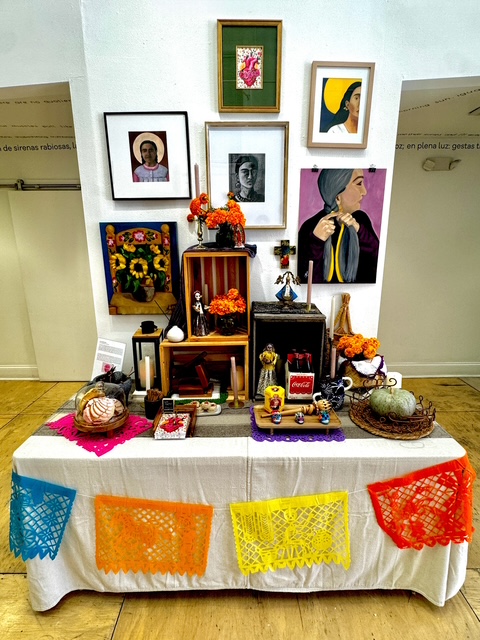
Las Que Nos Guían
Community altaristas: Gerardo Mares
Artist Statement
Gerardo Mares is a Milwaukee artist originally from Guanajuato, Mexico. Gerardo created Cocina de Coco Art in memory of his grandmother (Coco). Cocina de Coco Art is intended to be a creative art space that focuses on expressing art through a cultural lens. Cocinas (kitchens) are the heart and essence of many homes and cultures. Gerardo’s art is rooted in expressing his cultural identity through the use of a traditional Mexican kitchen setting. Nostalgic memories grounded in a Mexican kitchen is what inspired the theme for this art installation. Food, Mexican folk art, patterns, textiles, and natural elements are just some of the ingredients that inspired this altar. The altar is honoring grandmothers, matriarchs, and women who inspire us.
/
Gerardo Mares es un artista de Milwaukee originario de Guanajuato, México. Gerardo creó Cocina de Coco Art en memoria de su abuela (Coco). Cocina de Coco Art está pensado para ser un espacio creativo que se enfoque en expresar el arte a través de un lente cultural. Las cocinas son el corazón y la esencia de muchos hogares y culturas. El arte de Gerardo se basa en expresar su identidad cultural mediante el uso de un escenario de cocina tradicional mexicana. Los recuerdos nostálgicos enmarcados en una cocina mexicana fueron lo que inspiró el tema de esta instalación artística. La comida, el arte popular mexicano, los patrones, los textiles y los elementos naturales son solo algunos de los ingredientes que inspiraron este altar. El altar honra a las abuelas, matriarcas y mujeres que nos inspira
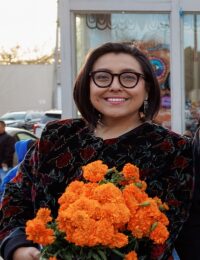
“Día de los Muertos lives through community — through the ways we create, remember, and pass down ancestral knowing with intention and love. Each contribution in this exhibition reminds us that creativity is one of our oldest inheritances, and that we keep our traditions alive by practicing them together.””
A reflection from Xela Garcia, Executive Director of WPCA